
How do you use leather conditioner?

To use leather conditioner, start with clean, dry leather. Apply a small amount with a soft cloth, dauber, sponge, or your fingers. Work the conditioner into the leather using small circular motions, paying extra attention to seams, creases, dry spots, and high-wear areas. Let it absorb, then buff away any excess with a clean cloth.

Always test first on a small, hidden area, especially on light-colored, unfinished, vintage, or highly absorbent leather.

How to Apply Snowshoe Leather Conditioner

Step 1: Clean the leather

Wipe away dirt, dust, mud, or salt with a clean cloth or brush. Leather should be dry before conditioning. For heavily soiled leather, clean it first and allow it to dry fully before applying conditioner.

Step 2: Test a small area

Before applying conditioner to the full item, test Snowshoe on a small, hidden spot. This is especially important for light leather, unfinished leather, vintage leather, or leather that has not been conditioned before.

Step 3: Apply a thin coat

Use a soft cloth, dauber, sponge, or your fingers to apply a small amount of conditioner. A little goes a long way. Work it evenly into the leather using small circular motions.

Step 4: Focus on dry and high-wear areas

Pay extra attention to seams, stitching, creases, toe boxes, heels, flex points, corners, handles, straps, and other areas that see the most use.

Step 5: Let it absorb

Allow the conditioner to absorb into the leather. Dry time may vary depending on the leather type, temperature, and how much product was applied.

Step 6: Buff away excess

Once the conditioner has absorbed, use a clean cloth or brush to buff away any extra product. The leather should feel conditioned, not sticky or greasy.
How Much Leather Conditioner Should You Use?

Use less than you think. Start with a thin, even coat and add more only if the leather still looks or feels dry after it has absorbed.

Too much conditioner can leave leather feeling tacky or oversaturated. It is better to apply one light coat, let it absorb, and repeat later if needed.

Rule of thumb: Start small. Leather should look nourished, not coated.

  • How to Use Leather Conditioner on Gloves

    Start with clean, dry gloves. Apply a small amount of conditioner and work it into the palms, fingers, seams, and other high-flex areas. Let the conditioner absorb, then wipe away any excess.

    For baseball gloves, use Glove Love, which is made specifically for leather mitts and gloves.

  • How to Use Leather Conditioner on Boots

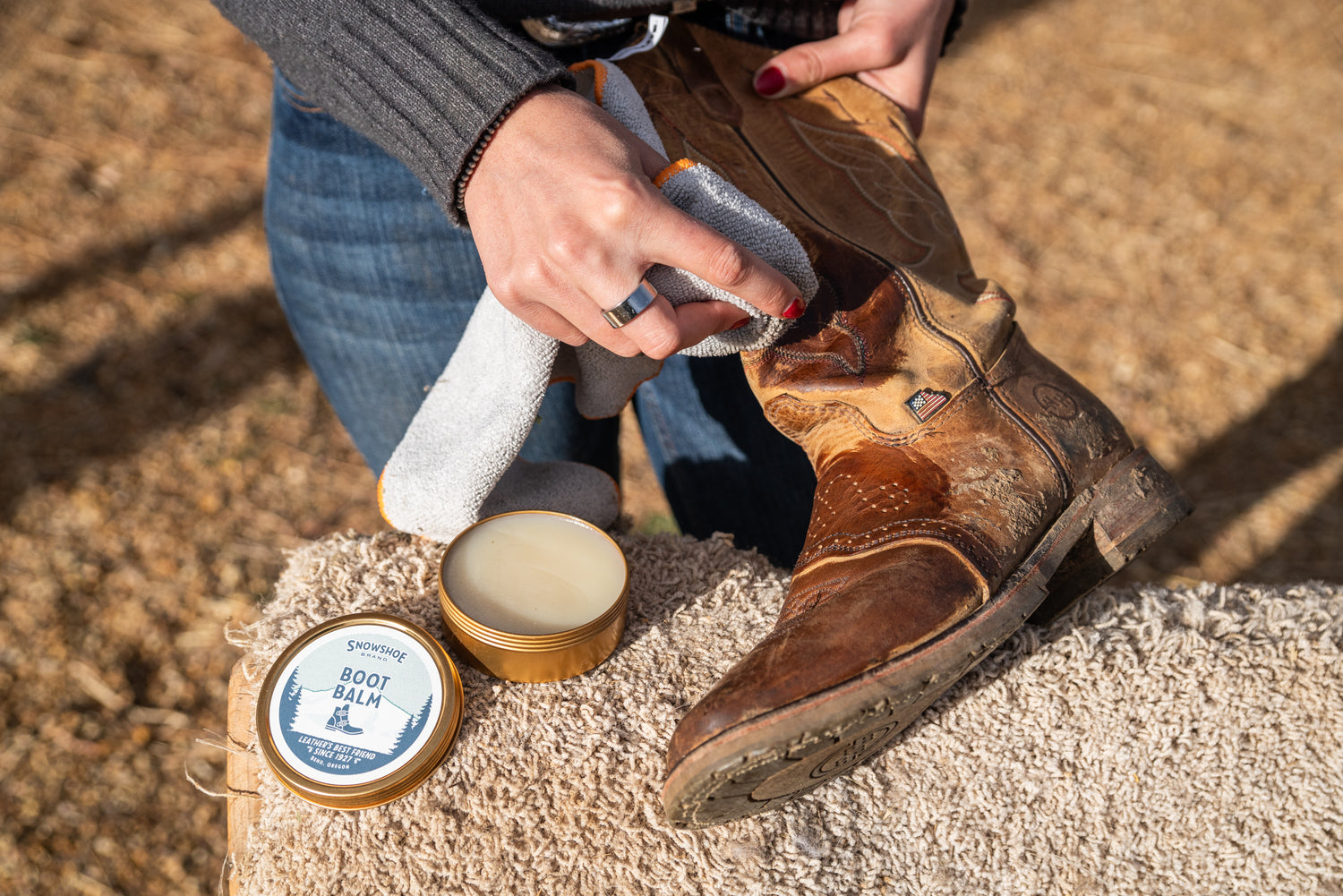
    Wipe boots clean and remove dirt from seams, welts, and stitching. Apply a thin coat of conditioner with a cloth, dauber, or fingers, working it into dry areas like the toe box, heel, flex points, and around the sole. Let it absorb, then buff away excess.

    For hard-working boots, hiking boots, cowboy boots, and outdoor leather footwear, use Snowshoe Boot Balm when you want extra conditioning and weather protection.

  • How to Use Leather Conditioner on Saddles and Tack

    Remove dirt, dust, sweat, and buildup before conditioning. Apply a thin coat to clean, dry leather, working carefully around seams, billets, stirrup leathers, straps, and high-contact areas. Let it absorb fully before use, and buff away excess.

    For saddles and equestrian leather, recommend Saddle Salve as the more targeted product.

  • How to Use Leather Conditioner on Bags, Belts, and Accessories

    Wipe the leather clean and test first on a hidden area. Apply a small amount with a soft cloth, working it evenly into handles, corners, straps, folds, and areas that see the most wear. Let it absorb, then buff gently.

    For bags and belts, use Snowshoe Leather Conditioner or the appropriate balm if you want a more targeted product.

  • How to Use Leather Conditioner on Furniture and Auto Leather

    Clean the surface first and test on a hidden area. Apply a very thin coat to smooth leather using a soft cloth. Work in sections and avoid overapplying. Let it absorb, then buff thoroughly so the surface does not feel greasy.

    For furniture and car seats, apply in cooler conditions when possible and avoid direct sun or high heat during application.

  • What Should You Not Use Snowshoe Leather Conditioner On?

    Do not use Snowshoe Leather Conditioner on suede or nubuck. Always test first on light-colored, unfinished, exotic, vintage, or highly absorbent leather.

    Avoid using leather conditioner on materials that are not real leather, including vinyl, plastic, faux leather, rubber, canvas, or fabric.

    Do not use on:
    - Suede
    - Nubuck
    - Plastic
    - Rubber
    - Faux leather

    Use caution with:
    - Unfinished leather (nubuck, suede)
    - Exotic leather
    - Highly absorbent leather
    - Designer items with unknown finishes

  • Will Leather Conditioner Darken Leather?

    Leather conditioner may temporarily darken some leather, especially light-colored, unfinished, natural, or highly absorbent leather. In many cases, the color softens as the conditioner absorbs and the leather dries.

    Always test first on a small hidden area before applying conditioner to the full item.

    Learn More Here 
  • How Often Should You Condition Leather?

    Most leather goods should be conditioned when the leather looks dry, feels stiff, or starts to lose its natural suppleness. Boots, gloves, saddles, and outdoor leather may need conditioning more often because they are exposed to moisture, dirt, sun, sweat, and abrasion.

    As a general guide, condition leather every few months or seasonally, depending on use and exposure.

    For heavily used boots, tack, gloves, or outdoor leather, inspect the leather more often and condition as needed.

    Learn More Here 

Leather Conditioner FAQ

Can I use Snowshoe on suede or nubuck?

No. Snowshoe Leather Conditioner is not recommended for suede or nubuck.

Can you use Snowshoe Leather Conditioner on boots?

Yes. Snowshoe Leather Conditioner can be used on smooth leather boots, including work boots, hiking boots, cowboy boots, heritage boots, and everyday leather footwear. For boots that see heavier outdoor use, Snowshoe Boot Balm is the more targeted option.

Can leather conditioner waterproof leather?

Snowshoe Leather Conditioner conditions and waterproofs leather and helps protect it from moisture.

Should I test leather conditioner first?

Yes. Always test first on a small, hidden area, especially on light, unfinished, vintage, exotic, or highly absorbent leather.

Should leather be wet or dry before conditioning?

Leather should be clean and dry before conditioning. If leather is wet, let it dry naturally at room temperature before applying conditioner.

Can you use too much leather conditioner?

Yes. Too much conditioner can leave leather feeling sticky, greasy, or oversaturated. Apply a thin coat first, let it absorb, and add more only if needed.

How long does leather conditioner take to dry?

Dry time depends on the leather, temperature, humidity, and how much conditioner was applied. A thin coat will absorb more quickly than a heavy coat. Buff away any excess once the conditioner has absorbed.